Every time the color of the squares changes along a C2C row, you have to switch yarn. On a simple stripe that happens once or twice per row. On a detailed graphghan it can happen a dozen times in a single diagonal. How you handle those changes decides how neat the back of your blanket is, how many ends you weave in, and how long the project takes.
Where color changes happen
A C2C block is worked in one color, so a color change always happens between blocks. In the written pattern each comma is a potential change: 4 A, 2 B, 6 A means you change from A to B after four blocks and back to A after two more. A row with five runs has four color changes.
The graph maker reports the colors and block counts for each row, and you can step through rows with the row viewer to see how busy each one is before you start.
How to change color in a block
The neatest method is to change in the last step of the previous block: work the final double crochet of the old color until two loops remain on your hook, then pull the new color through to finish the stitch. The new color then sits on your hook ready for the chain-3 (or slip stitches) that start the next block. Tug both tails gently so the join closes up.
If the next block starts with slip stitches across the top of the previous block, as it does when you decrease, slip stitch with the old color first and change color on the last slip stitch, so the slip stitches don't show in the wrong color.
Bobbins: one strand per section
For pictures, the standard method is a separate small ball — a bobbin — for each section of color on a row. When the row says 4 A, 2 B, 6 A, you need one bobbin of A for the first four blocks, a bobbin of B, and a second bobbin of A for the last six. Each bobbin stays at the back of the work and is picked up again when the next row reaches its section.
- Wind bobbins from the color counts: about half a yard per worsted block, plus a few inches for tails.
- Use clothespins, plastic bobbins or small zip bags to stop them tangling.
- Turn the work in alternating directions (clockwise, then counterclockwise) so the strands twist and untwist instead of building a knot.
Carrying yarn instead
For very short gaps — one or two blocks of another color — you can carry the main color along inside the chain-3 space or behind the stitches instead of cutting it. This saves two ends to weave in. The drawback is that carried yarn may peek through the holes of the fabric, especially with a dark color behind a light one, and it makes the blanket slightly less reversible. Many crocheters carry over gaps of up to two blocks and use a new bobbin for anything longer.
Color change at the end of a row
When the first block of the new row is a different color from the last block of the old row, change color as you finish the last block — before you chain up or slip stitch to start the next row. For an increase, the chain-6 is made in the new color. For a decrease, slip stitch across in the old color and change on the final slip stitch.
Color change on the same row
A change in the middle of a row works the same way: finish the last double crochet of the block in the new color, then drop the old color at the back. Drop the strands to the same side of the work every time so all the floats and tails end up on the back.
Designing graphs with fewer color changes
The fastest color change is the one that isn't there. Three settings in the graph maker have a big effect:
- Fewer colors. Each extra color adds sections. Many beautiful graphghans use only 4–8 colors.
- Remove confetti. "Confetti" are single isolated blocks of a color — each one is two color changes and two ends for one block. Cleanup replaces isolated blocks with the color around them.
- Smaller graph. Fewer blocks per row means fewer chances for the color to change, and far less detail that you cannot see from across the room anyway.
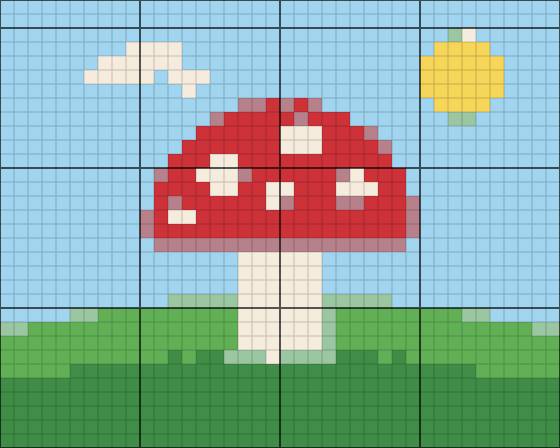 Cleanup off
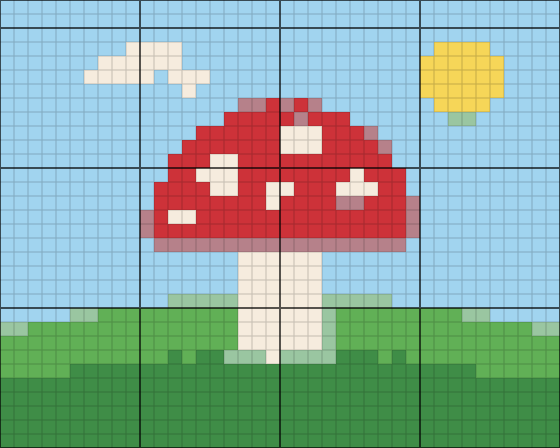 Light
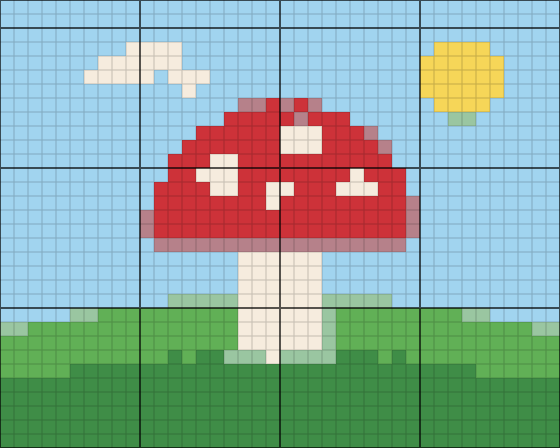 Strong
Photos are the worst offenders because they are full of subtle shading. Bold illustrations, pixel art and simple shapes translate into clean blocks of color. If you start from a photo, set Remove confetti to Strong and reduce the colors until faces and outlines still read.
Weaving in ends
Weave as you go — at the end of every row or every few rows — instead of leaving hundreds of tails for the end. Weave along the inside of the double crochets of the same color, change direction at least once, and trim close. Leaving tails of 4–6 inches gives you enough to weave securely without wasting yarn.
Quick reference
| Situation | What to do |
|---|---|
| Gap of 1–2 blocks | Carry the main color through the chain space |
| Gap of 3+ blocks | Separate bobbin for each section |
| Change at the start of a row | Change on the last stitch of the previous row |
| Change when decreasing | Slip stitch in the old color, change on the last slip stitch |
| Lots of single specks | Regenerate the graph with Remove confetti on |