Wool, concrete and terracotta are the three “dye-able” block families in Minecraft, each with 16 colors. They’re the backbone of almost every pixel art build. They’re not interchangeable, though: each has its own color character, cost and durability, and the right choice depends on what you’re building and where.
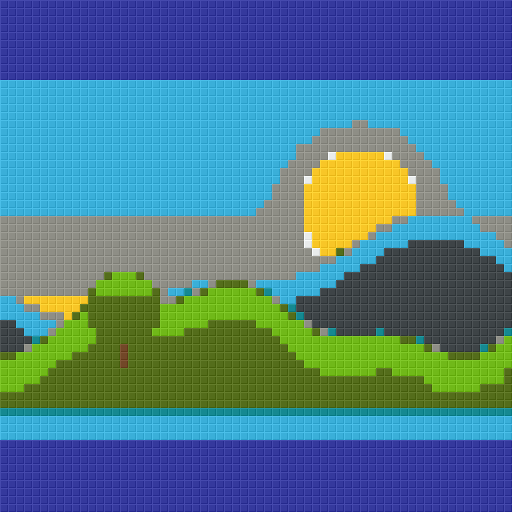 Wool
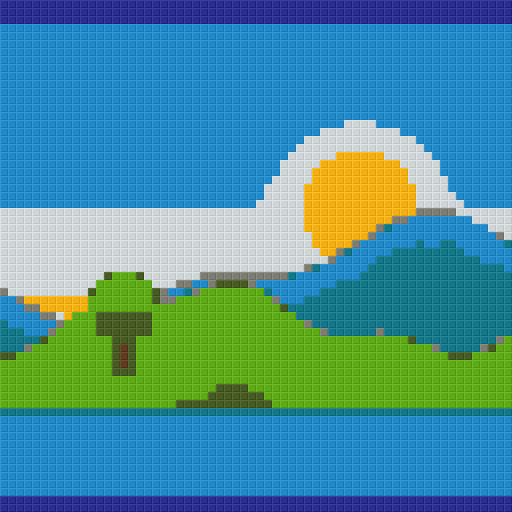 Concrete
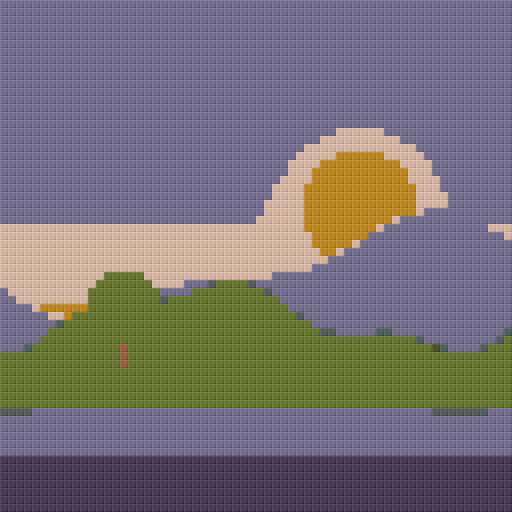 Terracotta
Wool: bright, cheap and soft
Wool colors are bright and slightly pastel. Light blue, lime and pink are noticeably lighter than their concrete equivalents, and the whites are warm. That makes wool great for cartoon art, game characters and anything playful.
- Cost: lowest. A sheep farm plus dyes supplies everything.
- Durability: flammable, and breaks instantly with shears — great for fixing mistakes, bad on servers with griefers.
- Look up close: a soft fabric texture.
Concrete: vivid and permanent
Concrete has the most saturated, flattest colors in the game. Its black is the darkest full block available, and its colors are slightly darker than wool, which gives photos punch and contrast.
- Cost: moderate. Four sand and four gravel per eight blocks plus a dye.
- Durability: fireproof, needs a pickaxe.
- Look up close: almost texture-free, so the wall looks like the preview from any distance.
Terracotta: muted earth tones
Terracotta’s 17 colors (including plain terracotta) are desaturated and warm. On their own they look dusty, but they fill the gaps between concrete colors: browns, tans, muted pinks, olive greens and blue-greys. They’re the best blocks for skin tones and natural scenes.
- Cost: free in badlands biomes, otherwise clay plus dye.
- Durability: fireproof, needs a pickaxe.
- Look up close: a faint grainy texture.
Side by side
| Wool | Concrete | Terracotta | |
|---|---|---|---|
| Colors | 16 | 16 | 17 |
| Character | Bright, pastel | Vivid, saturated | Muted, earthy |
| Flammable | Yes | No | No |
| Best tool | Shears | Pickaxe | Pickaxe |
| Best for | Sprites, cartoons | Photos, logos | Portraits, landscapes |
| Average match error on the sample (lower is better) | ΔE 24.4 | ΔE 19.2 | ΔE 25.4 |
The last row is measured by the generator: it converts the same image with each palette and reports the average color difference (CIE ΔE) between the original pixels and the chosen blocks. It’s a rough guide — some images favour wool’s brightness, others terracotta’s browns — but it shows how much a palette suits a particular picture.
Mixing palettes
Nothing stops you from mixing. The “All full blocks” palette combines all three families with planks, stone, sandstone, ores and more — about 95 blocks in total. The extra in-between colors give smoother gradients, which means you need less dithering and get cleaner large areas.
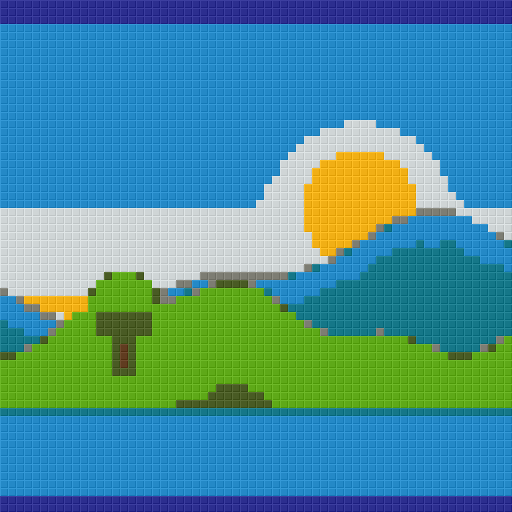 Concrete (16 blocks)
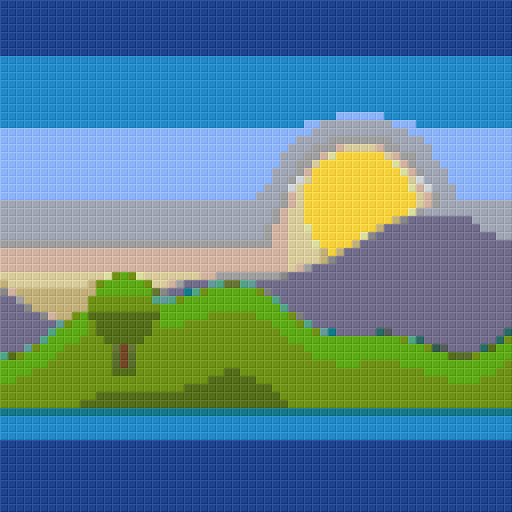 All full blocks
The catch is texture. Planks, stone and ore blocks have visible patterns up close, so a mixed wall can look busy from nearby even if the colors are spot on. And some of the extra blocks are expensive: diamond, emerald and gold blocks may appear for bright cyan, green and yellow pixels. Exclude any you don’t want by clicking them in the material list.
Colors that look different in game
On-screen swatches are averages. In the world, lighting changes everything: a wall facing north is always in shade, blocks under an overhang look darker, and smooth lighting adds soft gradients near corners. Wool’s texture catches light differently from concrete’s flat surface, so the same image can look softer in wool and harsher in concrete even when the colors match on paper. Resource packs change block colors too. If you play with one, build a small test patch of the main colors before committing, and compare it with the preview from the same distance you expect people to view the art from.
Weather and time of day matter less than you’d think — the relative contrast between blocks stays the same — but night-time lighting from torches is warm and will tint white and light gray towards yellow. Light the wall evenly, ideally from above or with hidden light sources behind a frame.
What about glazed terracotta?
Glazed terracotta has bold patterns that don’t read as a single color. From a distance they turn into noise, so the generator leaves them out. They make lovely borders and frames around your art, though.
Recommendations
- Sprites, emoji, flags: wool or concrete, no dithering.
- Photos and posters: concrete, or concrete + terracotta via all full blocks, light dithering.
- Portraits: all full blocks or terracotta, light dithering.
- Early survival: wool — the cheapest by far.
- Servers: concrete or terracotta — fireproof and harder to grief.
Open any palette on its own page — wool, concrete, terracotta or all full blocks — to see its colors and generate art with it.