Diamond halftone generator
Generate a diamond (rhombus) halftone screen with smooth midtones: corners join at 50% for a checkerboard. Adjustable angle, size and dot gain, PNG and SVG.
Tone: contrast, dot gain, min / max dot
About the diamond halftone screen
Diamond dots are squares rotated against the screen. Their corners meet exactly at 50% coverage, forming a checkerboard in the midtones — which is why print shops use diamond and elliptical dots to smooth the tone jump that round dots show at 70–80%.
 0 → 100%
Use diamond dots for portraits and skin tones in single-color screen printing — the midtones print smoother.
At 45° screen angle the diamonds become upright squares; at 0° they look like classic diamonds.
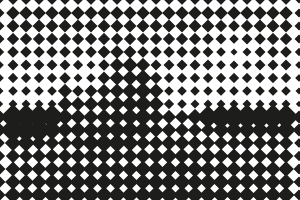 0°
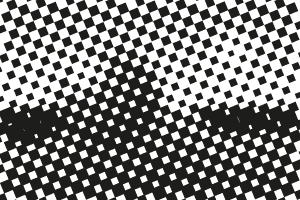 22.5°
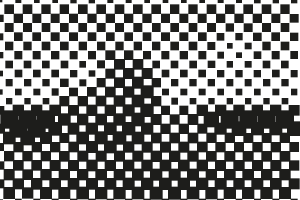 45°
Compare the other shapes: halftone dots, line halftone, square halftone, cross halftone. New to halftones? Start with what is a halftone.
How to make a halftone
- Add an image. Click Upload image, drag a file onto the preview or paste with Ctrl/⌘+V. Photos, logos and gradients all work; transparent PNGs keep their transparency.
- Choose shape and size. Pick dot, line, square, diamond or cross, then set the cell size (dot spacing) and screen angle — or switch to CMYK for four color separations.
- Tune the tones. Open Tone to adjust contrast, dot gain and the minimum and maximum printable dot for screen printing, DTF or engraving.
- Download. Choose the output width and click Download PNG, or SVG for vector dots. Tick Transparent background to export only the ink.
FAQ
How do I make a diamond halftone effect?
Upload an image, the shape is already set to diamond. Adjust cell size and angle, then download a PNG or SVG.
Can I export diamond halftone as SVG?
Yes. Every mark is exported as a vector path you can scale, recolor or cut.
What cell size should I use?
Cell size is the distance between dots in pixels. At 300 DPI output, cell size = 300 ÷ LPI: 6–7 px is about 45–50 LPI (screen printing on 230 mesh), 10 px is 30 LPI, and 16 px and up gives a bold pop-art look.